

Adapted Bedrooms Can Be Stylish: How Occupational Therapy Brings Function and Design Together
When you think of bedroom adaptations, do you picture clunky hospital beds and clinical-looking equipment? It doesn’t have to be that way. Modern home adaptations are designed to blend seamlessly with your décor, even when needs are complex. With the right advice from an Occupational Therapist (OT), you can create a space that’s safe, practical, and aesthetically pleasing.
Why Does Style Matter in Home Adaptations?
Your bedroom is more than just a place to sleep, it’s your sanctuary. It should feel comfortable, personal, and inviting, not like a hospital ward. A well-designed adapted bedroom can boost mood, dignity, and independence. When the environment feels homely, you’re are more likely to feel relaxed and in control.
The Role of Occupational Therapy
We don’t just tick boxes for safety. We carry out a comprehensive assessment of your needs, your environment, and your goals. This includes:
- Functional assessment – How you move, transfer, and use the space.
- Environmental assessment – The layout, furniture, and potential hazards.
- Personal goals – What matters most to you, from independence to style.
Once the assessment is complete, your OT can recommend solutions that work for you and these days, there are plenty of stylish options available.
Many people assume that adaptations mean bulky, unattractive equipment. While that was often true years ago, things have changed. Manufacturers now design products with aesthetics in mind, offering finishes, colours, and features that complement modern interiors.
Top Tips for a Beautifully Adapted Bedroom
Here are just a few practical ideas to keep your bedroom looking stylish while meeting your needs:
1. Choose Contemporary Bed Frames
Profiling beds are essential for many people with mobility needs, but they no longer have to look clinical. Today’s designs include sleek wooden frames, upholstered headboards, and even custom finishes that blend with your décor.
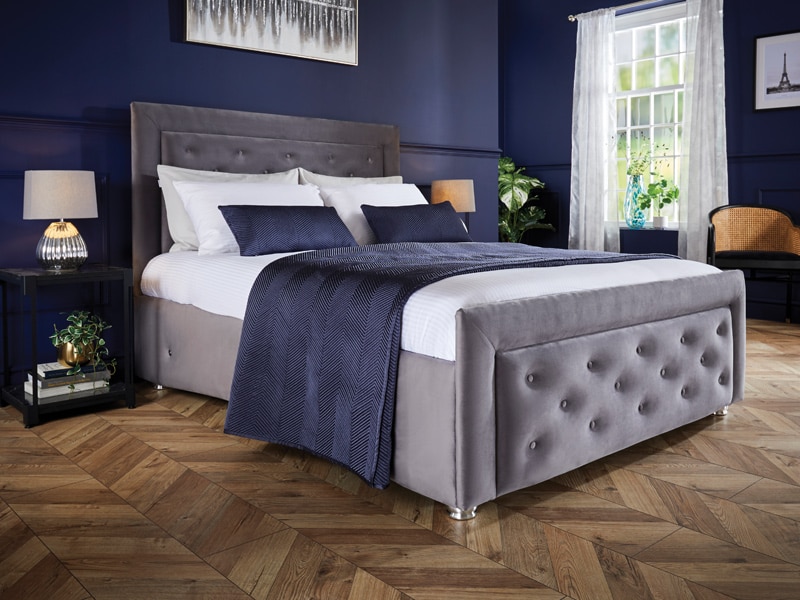
Verona Adjustable Bed from Willowbrook
2. Hide the Tech
Motors and mechanisms can be discreetly tucked away, so your bed looks elegant while offering full functionality. Some beds even have hidden castors and integrated storage.

Eyre Height-Adjustable Bed from Laybrook
3. Add Warmth with Colour and Texture
Layered bedding, soft throws, and neutral tones help soften the clinical feel. Choose bedding that is easy to wash but still looks luxurious.
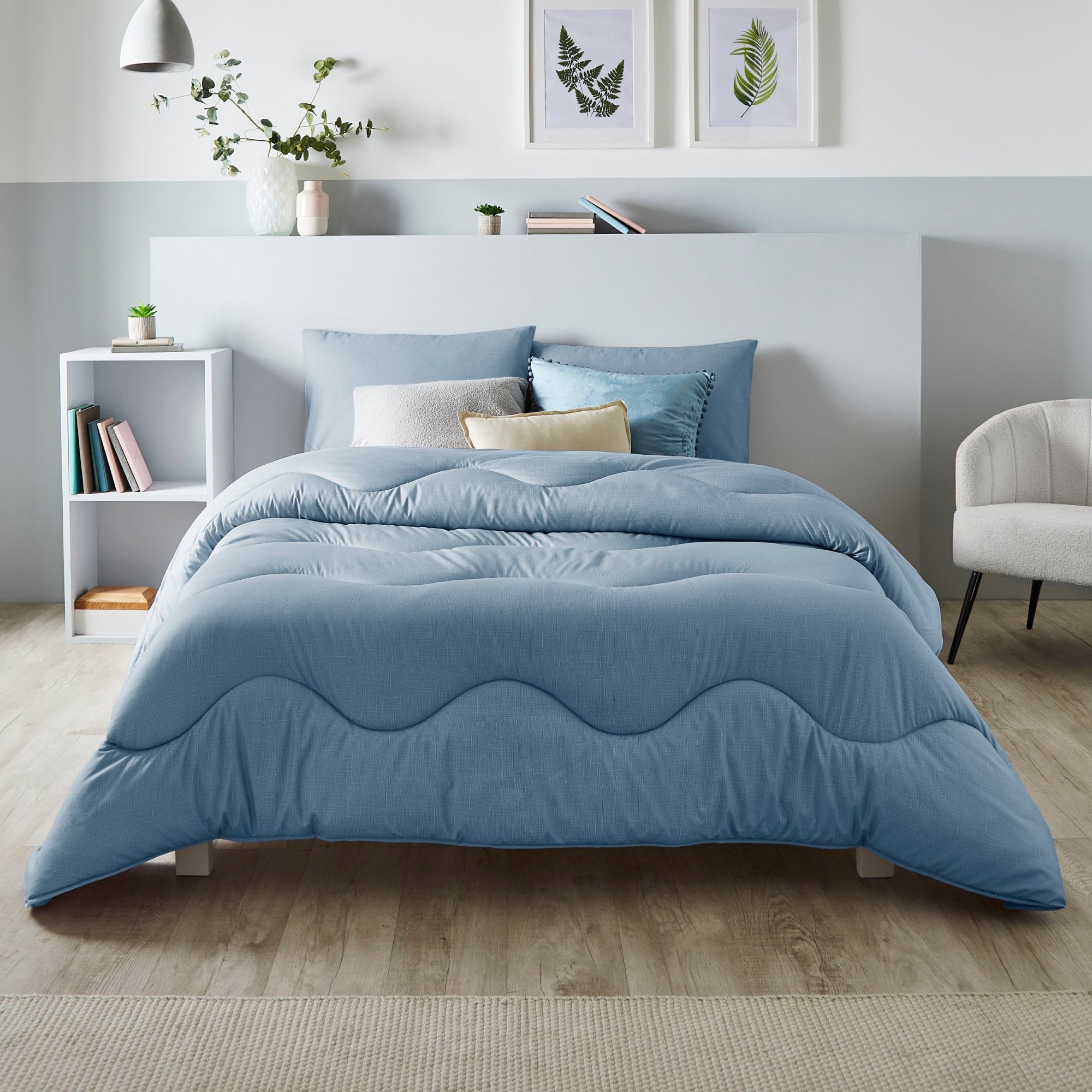
Night Lark Linen Print Coverless Duvet from Fine Bedding
4. Smart Storage Solutions
Built-in drawers or bedside tables with integrated charging points keep equipment accessible but out of sight. This is especially useful for medical devices or mobility aids.

Ivy Bronx Smart LED Nightstand from Wayfair
5. Lighting That Works and Looks Good
Motion-sensor LED strips under the bed or stylish bedside lamps improve safety without compromising style. Adjustable lighting can also support better sleep routines.
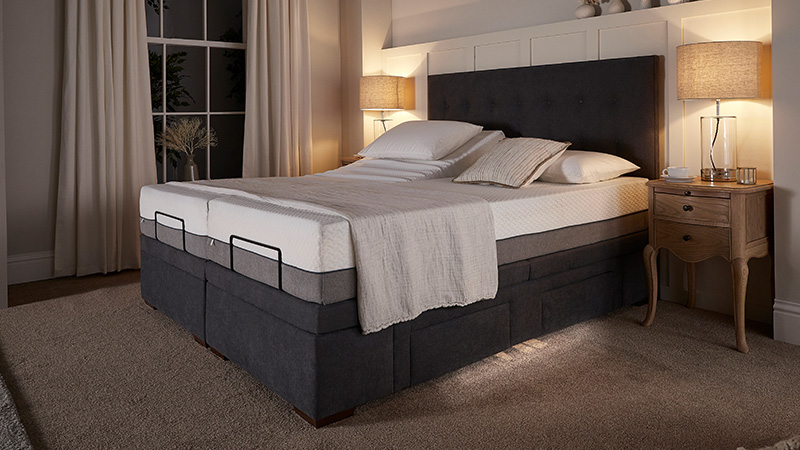
Carrington Premium Adjustable Bed with Plus Base Technology from Opera Beds
6. Co-ordinate Equipment
Hoists and rails now come in finishes that match your furniture – some even offer custom colours. Ceiling track hoists can be recessed for a minimal look.
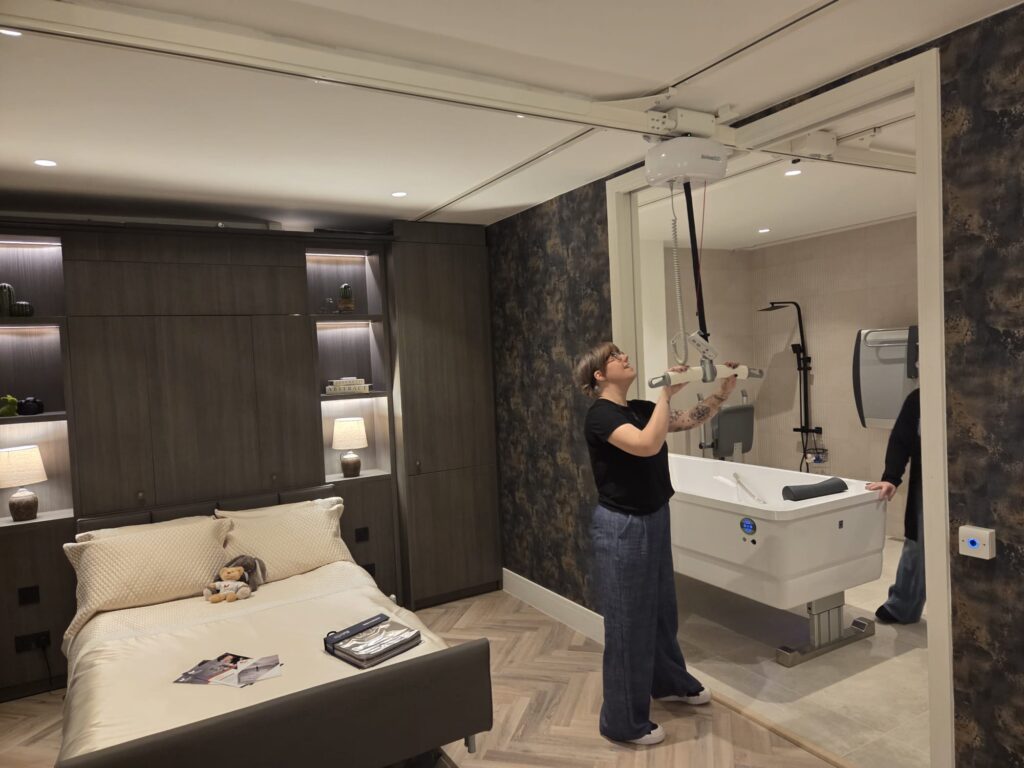
Airglide360 Recessed Ceiling Track Hoist from Innova Care Concepts
Why Bring in an OT Early?
We can help you avoid costly mistakes. We know what’s available, what works for your needs, and how to future-proof your space. We’ll also make sure adaptations meet safety standards while keeping your home looking like a home.
Bedroom adaptations don’t have to be ugly. With the right advice from an Occupational Therapist, you can explore innovative solutions that make your space safe, functional, and beautiful. If you’re considering home adaptations, start with an OT assessment. It’s the best way to ensure your bedroom works for your needs without compromising on style.
Also See: